Pottery Tours in Sifnos – Meeting the People Behind the Clay
We visit traditional and modern workshops, listen, watch and sometimes get our hands on the wheel.
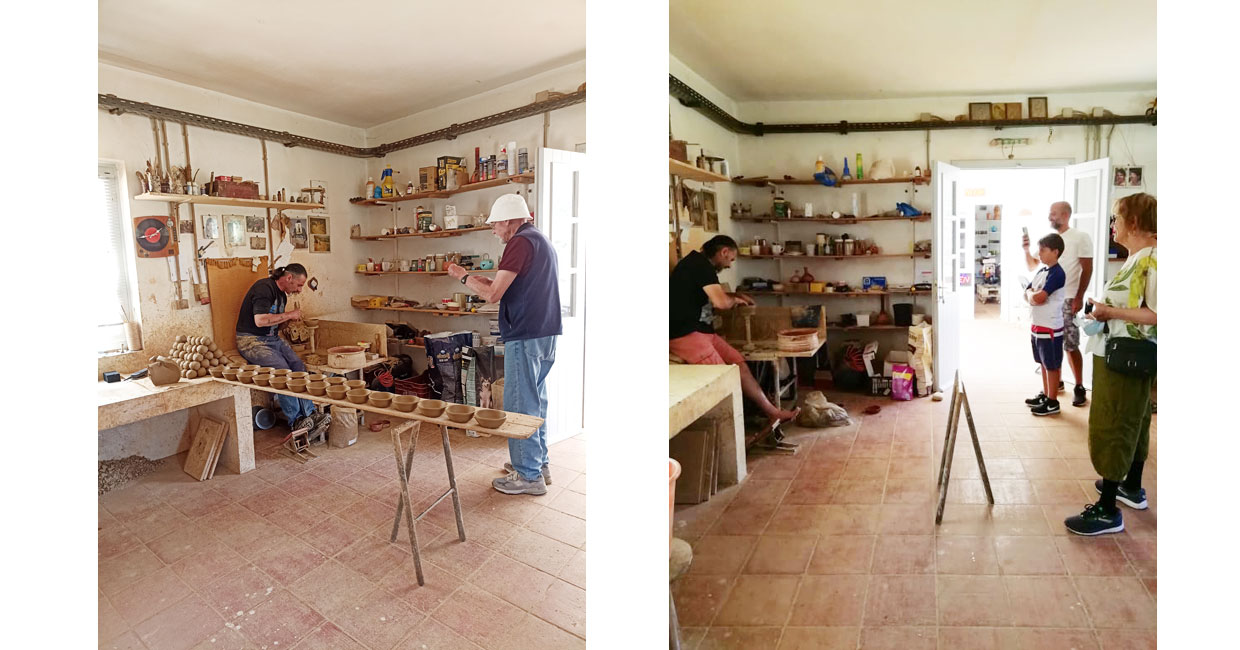
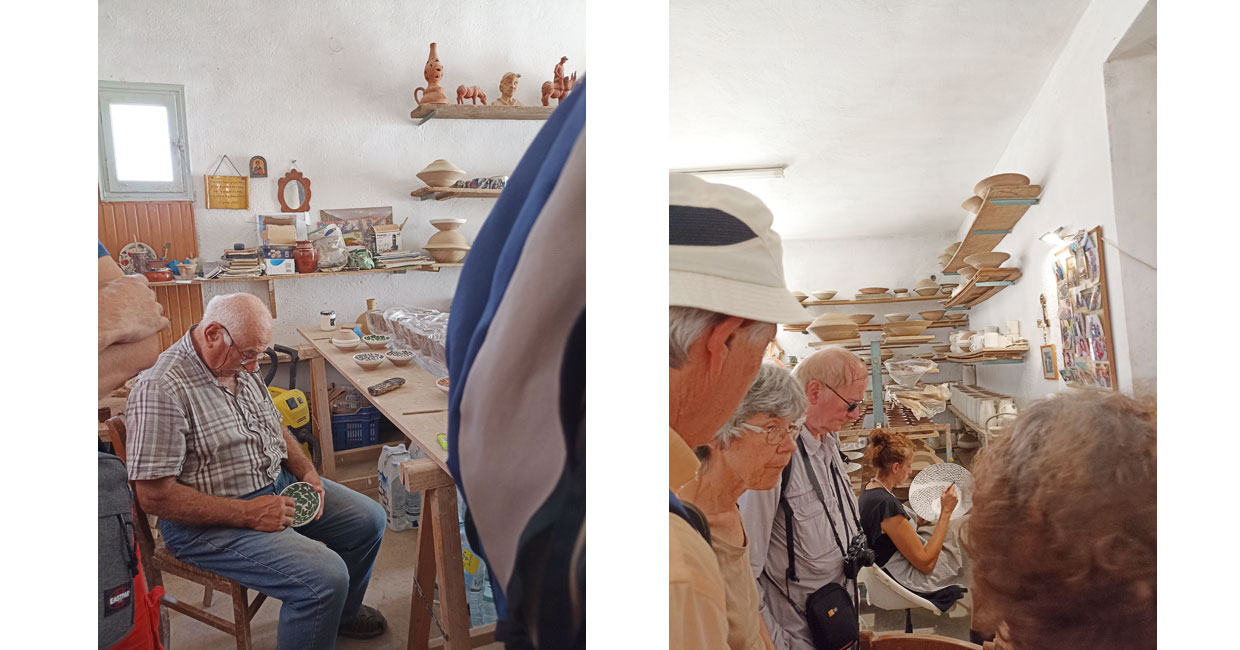
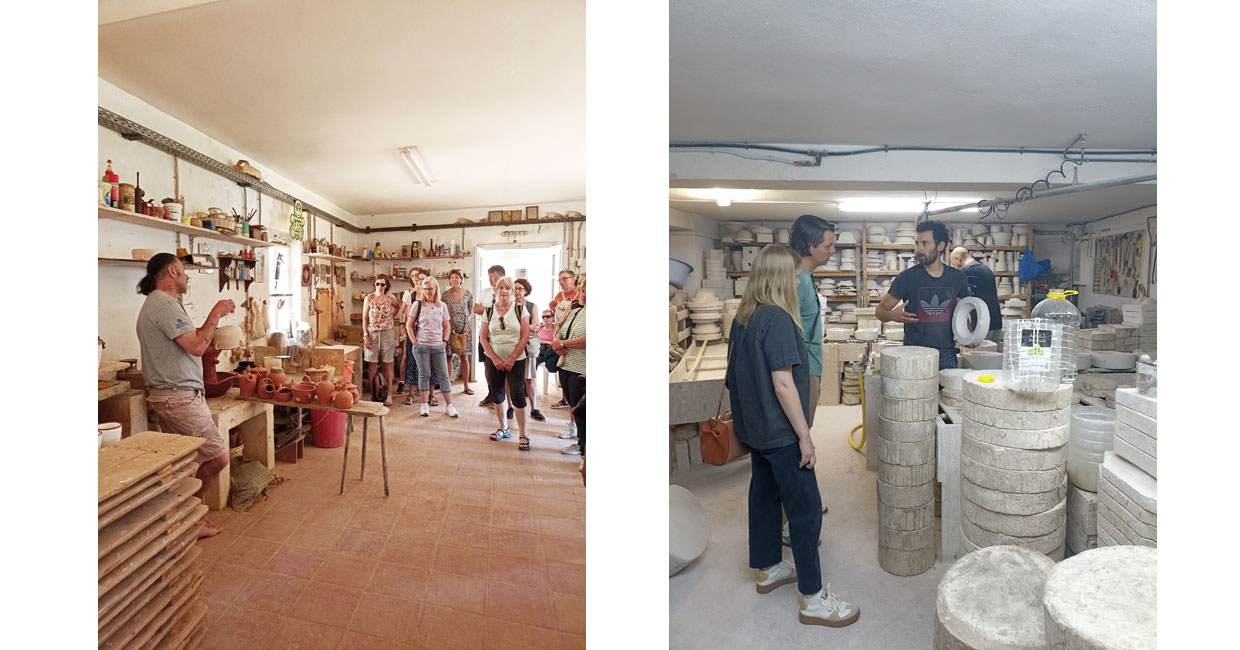
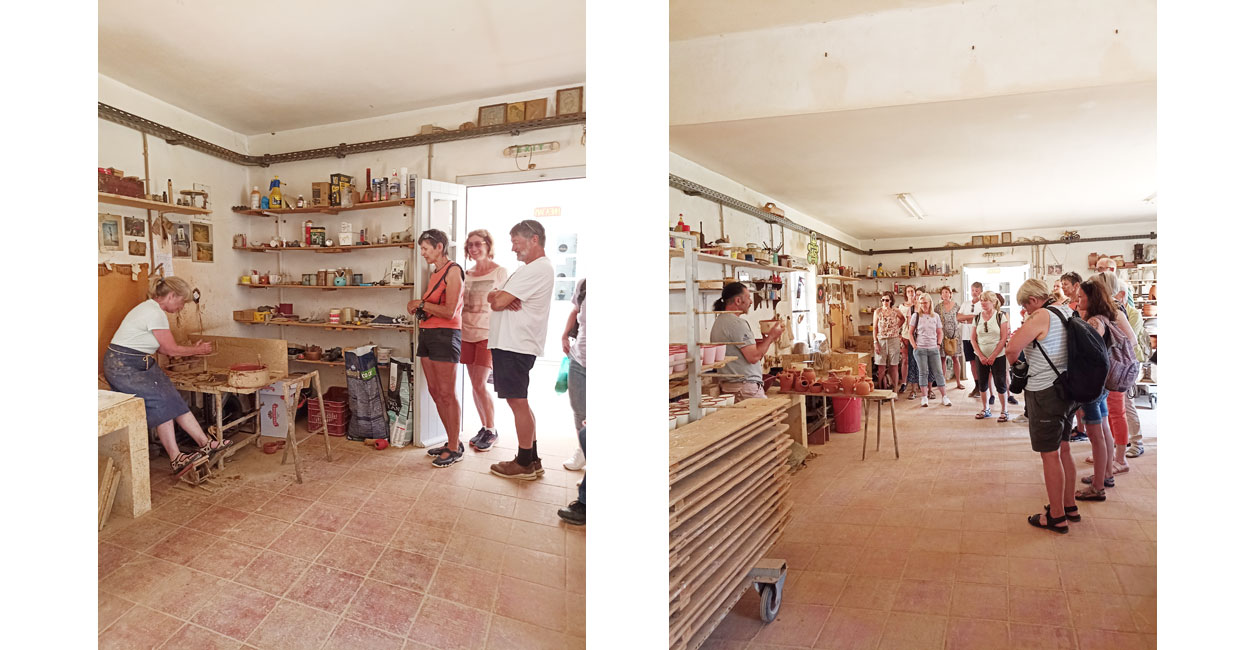
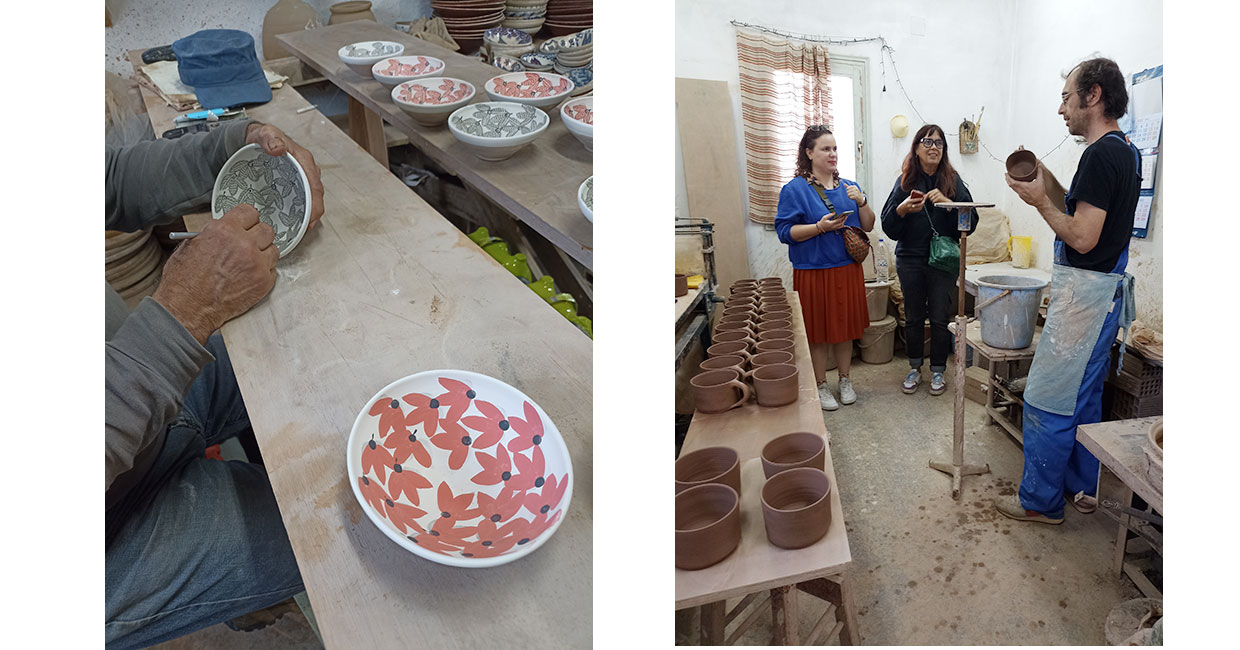
On this pottery tour in Sifnos we visit local workshops where ceramics are still made every day. We step into two traditional workshops that still follow the old ways, and one modern workshop that continues the tradition with a different look.
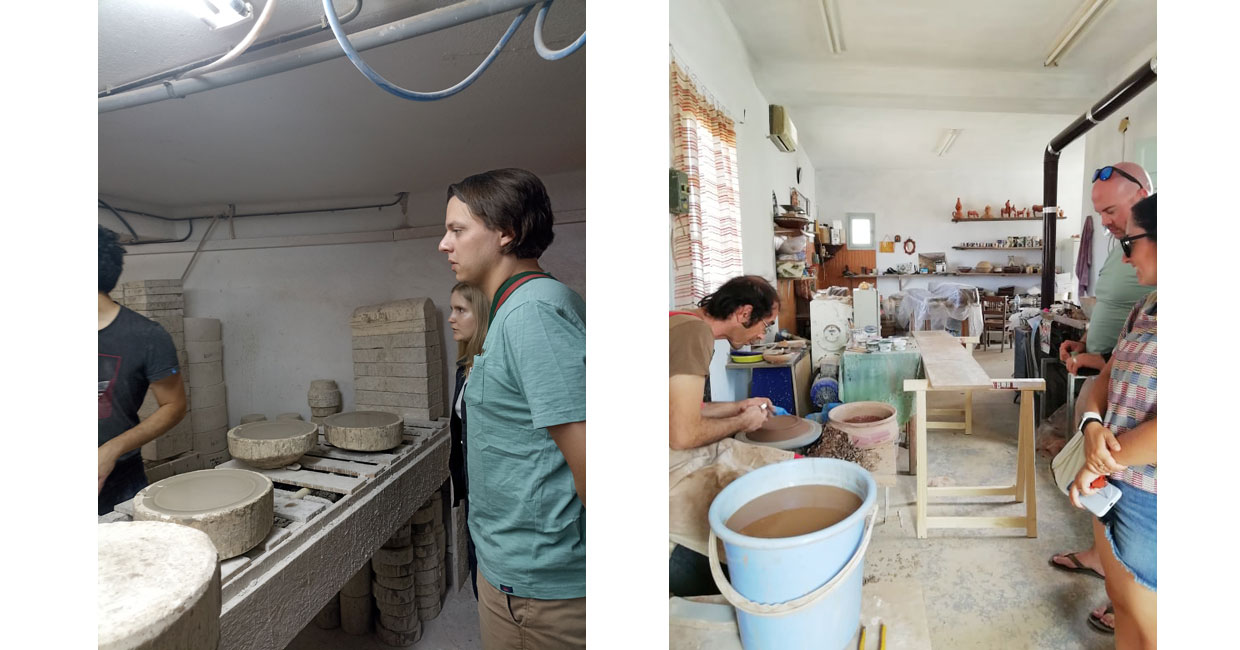
We talk about the long local tradition of pottery in Sifnos, see the tools, the preparation of the clay and the different stages of making ceramics. Along the way, we notice what has stayed exactly the same, what has changed and why both the old and the new ways still exist side by side.
Two versions of the pottery tour
There are two main ways to experience the pottery tradition of Sifnos. Both are small-group tours and include real working spaces, not showrooms created only for visitors.
-
Version A – Three workshops (traditional & modern)
In this version we visit three different workshops: two traditional and one modern. We talk about the local history of pottery, see the tools and the spaces where clay is prepared and shaped, and follow the procedure of making ceramics from the first lump of clay to the finished piece.
We focus on the stories of the people who work there and on the differences and similarities between the past and the present. This is a good option if you are especially interested in the tradition itself and want to see more workshops in one tour.
Duration: Around 2–3 hours
-
Version B – Pottery tour with hands-on wheel session
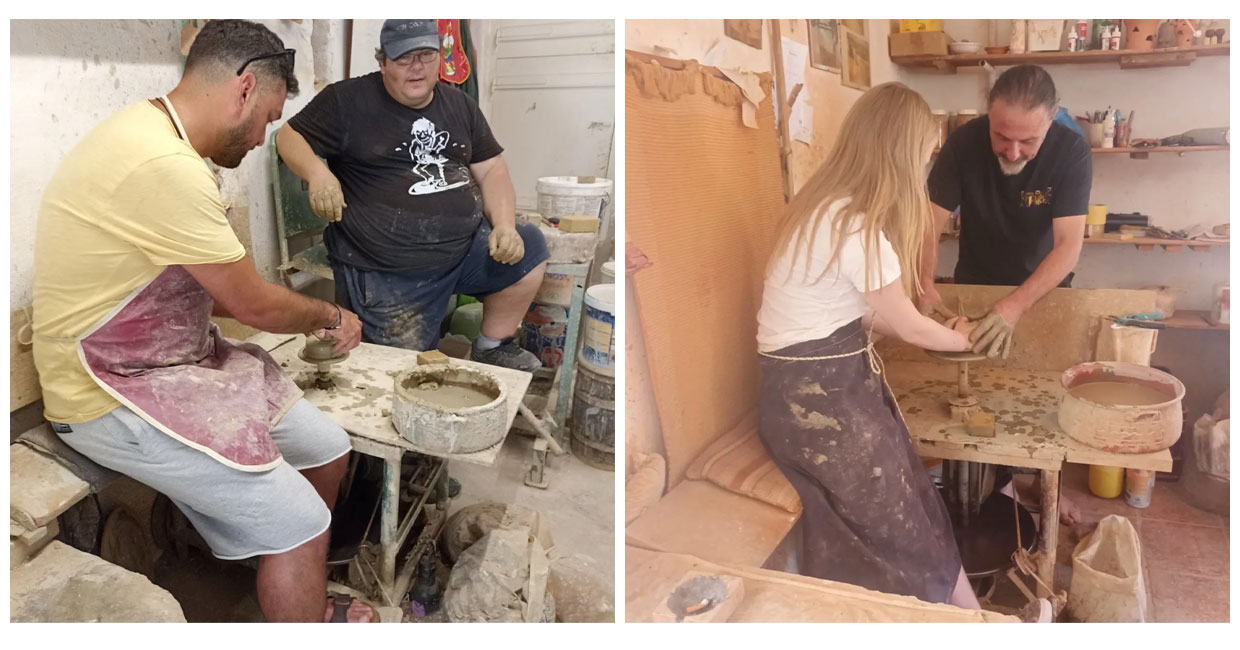
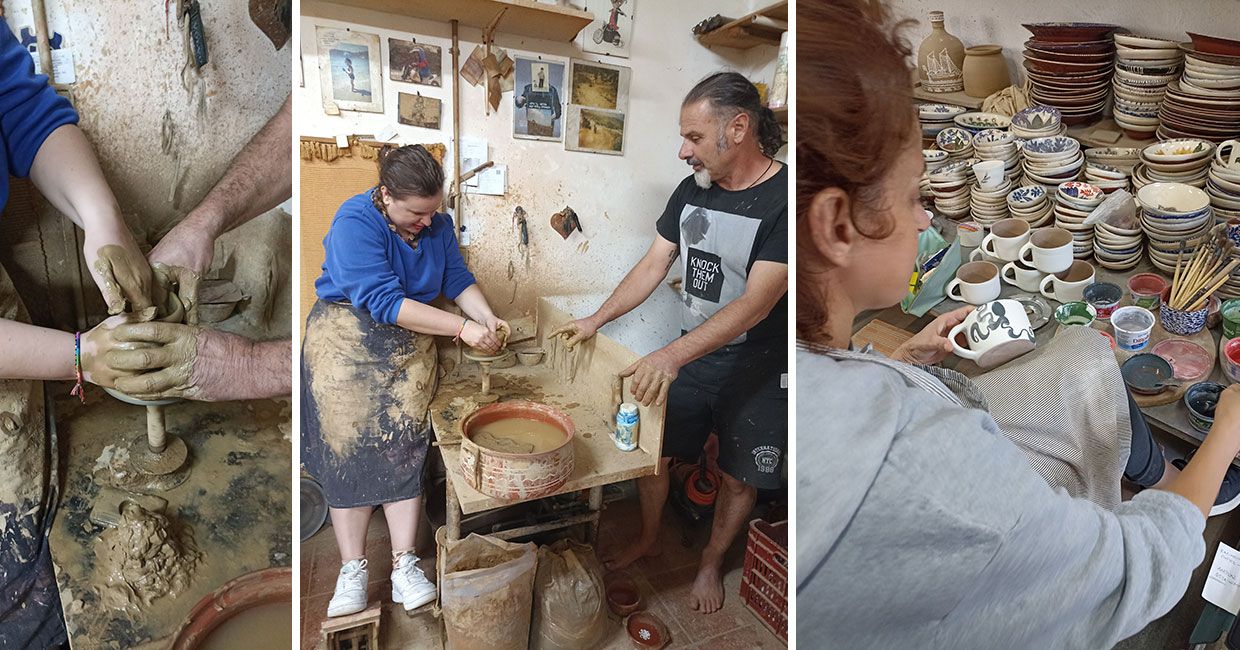
In this version we visit two workshops as observers, like in Version A, and a third one where the potter gives a short presentation and then invites you to try the wheel.
You see a piece being formed in front of you and then, with guidance, you can sit at the wheel yourself and make something simple. It is not a long lesson, but it is enough to feel the clay and understand how much practice hides behind a “simple” bowl or cup.
Duration: Approximately 3 hours (depending on the number of people participating in the hands-on part)
Who can join & trying the wheel
Pottery tours are suitable for adults, teenagers and children who are curious about how things are made. We move mainly between workshops by car and short walks, so the physical effort is light compared to other activities.
All ages are welcome to try the wheel in the hands-on version. Children up to around 6 years old may need some help from a parent to reach and use the pedal comfortably. It is perfectly fine if they only want to touch the clay or sit on your lap while you work together.
Because we enter real workshops, it is good to wear clothes that can take a few drops of clay or dust without stress.
Availability & practical notes
Pottery tours are not available on Sundays, because many of the workshops we visit are closed that day.
The exact starting time can change slightly depending on the season and the schedule of the workshops. When you send a request, we choose together what works best for you and for the potters we will visit.
There is usually time to buy ceramics directly from the workshops if you wish. This supports the potters in a very direct way and gives you the chance to take home something you have seen being made or fired in the same place.
Practical details

- Location: Pottery workshops in different parts of Sifnos
- Type of experience: Guided visits to traditional & modern workshops, with the option of a hands-on wheel session
- Guide: Experienced English-speaking local guide on all tours
- Version A duration: Around 2–3 hours (three workshops, no wheel for guests)
- Version B duration: Around 3 hours (two workshops as observers + one with hands-on wheel)
- Days: Not available on Sundays
- Wheel: All ages welcome, small children may need help reaching the pedal
- Transfers: Transfers between workshops can be included on request with an extra cost.
To ask about dates, starting times or to choose between Version A and Version B, please send me a request with your preferred day (except Sunday), the number of people and whether you would like to include the hands-on wheel part.
-
How many workshops do we visit during the pottery tour?
In Version A we visit three workshops: two traditional ones and one modern. In Version B we also visit three workshops, but in the last one we stay longer for a presentation and a short hands-on session at the wheel. In all cases, these are real working spaces, not only showrooms.
-
What is the difference between Version A and Version B of the pottery tour?
Version A is a visiting tour. We go to three workshops, talk about the tradition, see tools, clay preparation and finished ceramics, and focus on the stories of the potters and the differences between past and present. Version B includes two visits like in Version A and a third workshop where the potter gives a presentation and then invites you to try the wheel yourself. Version B usually takes a little longer because of the hands-on part.
-
Can I try the pottery wheel and make something myself?
Yes, if you choose Version B of the pottery tour. In the last workshop, the potter demonstrates the wheel and then gives you the chance to sit and try it yourself. It is a short introduction, not a full course, but it is enough to feel the clay and understand how much skill is needed to control it. At the end, with the help of the potter, you will have your own bowl or cup and if you have at least two more days on the island, you will be able to come back and take it glazed and ready for use!
-
Is the pottery tour suitable for children and families?
Yes. All ages are welcome on the pottery tour and children usually enjoy seeing how things are made. On the wheel, children up to around 6 years old may need help from a parent to reach the pedal and to feel comfortable. It is perfectly fine if they sit with you while you work. Sometimes they are happy to make something from clay using their hands and not the wheel, which is also fine. Children older than 6 can fully participate.
-
Are pottery tours available every day?
Pottery tours are not available on Sundays, because many of the workshops we visit are closed. On other days, availability depends on the schedules of the potters and the season. When you contact me with your preferred day, I will check which workshops are open and suggest the best time for your tour.
-
What should I wear for the pottery tour?
It is best to wear comfortable clothes and shoes that you do not mind getting a bit dusty or a little stained with clay, especially if you choose the version with the wheel. The workshops are working spaces, with shelves, kilns and tools, so wear anything that will help you relax and enjoy the experience without worrying about them getting dirty.
-
Will there be time to buy ceramics from the workshops we visit?
Yes. In most workshops there is a small space where you can see finished pieces and buy them directly from the potter if you wish. Buying from the workshop supports the potter in a very direct way and lets you take home something made in the same place you have just visited.
-
How can I book a pottery tour in Sifnos?
To book, please send me a request through the contact page with your preferred day (except Sunday), the number of people in your group and whether you prefer Version A (visits only) or Version B (with wheel). I will answer personally with availability, meeting point and all practical details.